
Lenovo Legion Go 2 Leaked Powered By Ryzen Z2 Extreme APU And OLED Panel
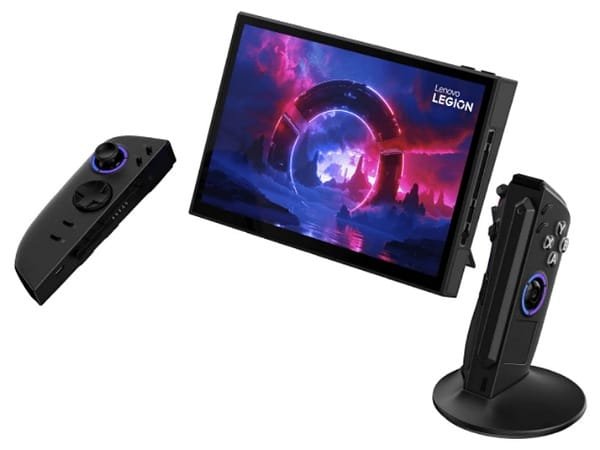
The next generation of Lenovo’s gaming handheld, Legion Go 2, will debut soon with notable updates attached while retaining some key factors from its predecessor. This includes detachable controllers, as well as a higher-grade configuration, and seeks to strengthen Lenovo’s hand in the competitive handheld game sector. Upgraded Hardware and Display According to reports, the Legion Go 2 will feature some serious hardware upgrades. Fueled by the AMD Ryzen Z2 chip, the handheld will utilize the Zen 5 architecture and improved RDNA 3.5 graphics. That’s a jump from the original Legion Go, which utilized the Ryzen Z1 Extreme chip based on Zen 4 architecture and RDNA 3 graphics. It also gets a refreshing display. The new console is believed to continue using the 8.8-inch display with 2560 x 1600p resolution, though Lenovo might give an OLED panel for upgraded visuals. Additionally, the company may bring in an LCD version as its budget version to make things more economic for budget-oriented gamers. Features retained and design update While Lenovo will be touting upgrades, the manufacturer will retain some of the quirks that made the original Legion Go unique. That would include the detachable controllers found on the original Legion Go . Visually, the Legion Go 2 is a bit different from its predecessor. While images show some design changes, the console will run on Windows 11. Notably, the Steam button seen on the Legion Go S controller is missing from the Legion Go 2, suggesting a more streamlined design. Performance and Battery Enhancements The Legion Go 2 is going to bring a serious performance boost with the Radeon 890M graphics featuring 16 Compute Units, making it much faster and more efficient than its predecessor. It will be improved in terms of battery life too. There’s word that the Legion Go 2 could pack an 80Wh battery for much longer play sessions. It’s a good move by the company, as with each passing day, other handheld consoles are also having bigger batteries for extended game-playing. Legion Go 2 vs. Legion Go S Lenovo is reportedly also preparing a more affordable handheld, the Legion Go S, to launch alongside the Legion Go 2. The Legion Go S will be smaller in size and not include detachable controllers like the Legion Go 2. It should be several hundred dollars cheaper, making it a budget-friendly option for gamers. Expected Release and Pricing The Lenovo Legion Go 2 is supposed to launch in the first quarter of 2025, though the exact date and price remain under wraps. Upgraded with features, positioning competitively, the Legion Go 2 will definitely go strong in the gaming handhelds market. Conclusion The Lenovo Legion Go 2 represents both innovation and familiarity at the same time. By providing state-of-the-art hardware, enhanced visuals, and extended battery life, while retaining signature features such as detachable controllers, Lenovo is well-placed to make its mark on the next-generation gaming landscape. Gamers can expect a really thrilling release in 2025. Source & Images: The Verge
Nintendo Switch 2: How NVIDIA DLSS and Resolution Expectations Factor In
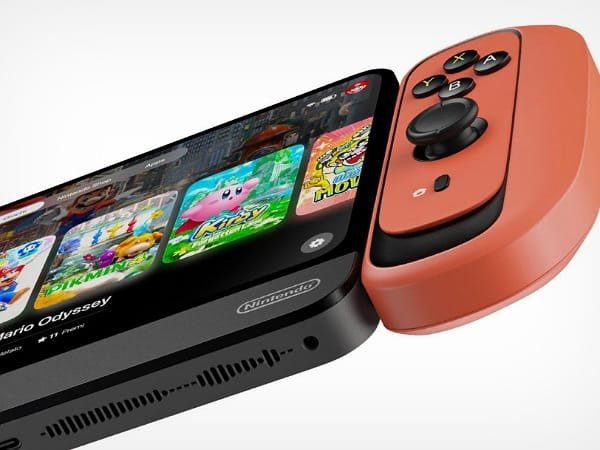
The Nintendo Switch 2 is going to feature NVIDIA’s Deep Learning Super Sampling (DLSS) to improve gaming performance. Still, the system’s hardware will likely struggle to achieve high resolutions such as 4K docked or 1080p handheld. DLSS: The Backbone of Nintendo Switch 2 Graphics Digital Foundry, one of the leading tech analysis groups, recently discussed the potential performance of the Nintendo Switch 2 on their podcast. In response to a fan query about resolution output, the experts said that DLSS will be a cornerstone of the console’s visual capabilities. It’s not expected to compete in the same ballpark as current-generation gaming systems like the PlayStation 5 or Xbox Series X, considering the system is expected to use a mobile chip, so instead it will use DLSS to upscale visuals efficiently. But DLSS is a power-hungry technology, so it’s not always going to hit those lofty resolutions. For handheld gaming, the tech will likely aim for 720p or 900p. Ports of older titles-say, from the PlayStation 4 and Xbox One era-could reach 900p to 1080p in handheld mode and up to 1440p when docked. Struggles with Demanding Games In the case of more graphically intensive modern games, some limitations are likely to present themselves with the Nintendo Switch 2. Here, developers will have to make a careful balance between the output resolution and visual quality. Output resolutions may drop off as low as 720p for handheld mode and not exceed 1440p in most third-party games when in docked mode. Nintendo’s first-party titles may adopt this approach, though. These titles may provide far less complex game content, ensuring developers keep costs low to help achieve higher resolutions, sticking to the performance thresholds many Nintendo fans have been bred to expect. That historical approach would also explain some of Nintendo’s longstanding neglect in terms of graphical innovation while developing games. Unreal Engine 5 Challenges One area where the Nintendo Switch 2 might struggle significantly is with games developed on Unreal Engine 5. Features such as Lumen, which offer more realistic lighting, can be noisy and rough at low resolution. Developers may use higher internal rendering resolutions at the expense of output resolution or adjust other visual settings to keep the game playable. Despite these compromises, the small screen size of the Switch 2 could help mask these issues, making the games look acceptable in handheld mode. Optimized DLSS for Nintendo Switch 2 A game-changer for Nintendo Switch 2 would be an optimized version of DLSS, fit for its hardware. This would not be unprecedented; Hello Games implemented a lightweight version of AMD’s FSR 2 technology on the Switch port of No Man’s Sky. If NVIDIA creates a similar solution, the Switch 2 could achieve improved performance while minimizing the compromises associated with traditional DLSS. Awaiting the Official Reveal While Nintendo hasn’t yet officially announced the Switch 2, the industry speculation just keeps on coming. The reliance on DLSS and the constraints of the hardware point toward innovation and cost-effectiveness over raw power for the console. Gamers are awaiting an official announcement to know the extent of what the next-generation Switch can deliver. Source