
Samsung Galaxy Z Flip FE And Z Flip 7 To Be Powered By New Chipsets
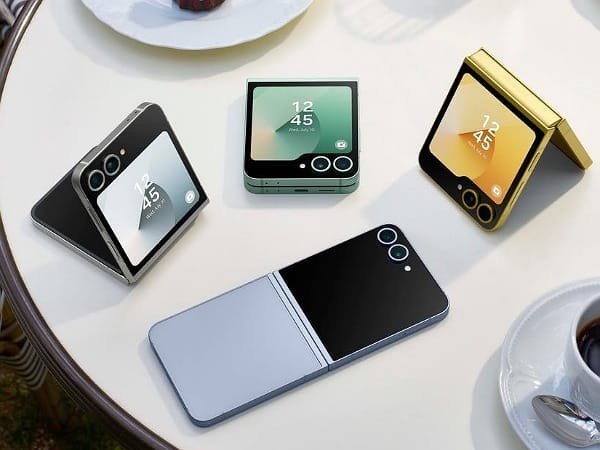
Samsung’s leadership in the foldable smartphone market-which its Galaxy Z Fold and Z Flip series has pioneered for the last couple of years-is steadily getting stronger. While Samsung is on course to flesh up the range with a new budget-friendly foldable, the Galaxy Z Flip FE (Fan Edition), alongside a premium Galaxy Z Flip 7, rival products are coming with more affordable options. Galaxy Z Flip FE: Affordable Innovation It is reported that Samsung will release the Galaxy Z Flip FE for the mid-range market segment. As per @Jukanlosreve, one of the consistent leakers of Samsung phones, the Z Flip FE will boast the Exynos 2400e chip, which is also expected to power the Galaxy S24 FE. This makes it a strategic pick to keep performance up while costs are competitive and squarely takes on Motorola’s more budget-friendly Razr models. This could also pave the way for more mainstream adoption with the introduction of a “Fan Edition” for foldables, allowing the flip design to be more affordable to the mass market. Provided Samsung can continue with this balancing act of affordability and innovation, then it may have secured a position in the middle-tier foldable market. Galaxy Z Flip 7: Pushing Premium Boundaries The Galaxy Z Flip 7 will be the next flagship flip foldable by Samsung, speculated to come with its Exynos 2500 powerhouse. Little was known about this chip so far, Samsung confirmed its development during an earnings call recently. The Exynos 2500 will probably bring enhanced performance and efficiency, possibly curing the low yield problems which resulted in thinner adoption of its predecessors. Contrary to prior rumors that said the Z Flip 7 could come with the Exynos 2400, recent leaks show the opposite: Samsung wants to keep the more powerful Exynos 2500 for its flagships. This could make the Z Flip 7 a powerhouse as well as an innovative one in the foldable space. A Look into Samsung’s Game Samsung’s processor strategy for its new foldables is closely in line with its general smartphone roadmap. While the Galaxy S24 FE already utilizes the Exynos 2400e, it is expected that the Z Flip FE will follow suit. Meanwhile, further intrigue arises on the processor choices speculated for the Galaxy S25. It is reported that Samsung may adopt Qualcomm’s Snapdragon 8 Elite across all Galaxy S25 variants. This may change the appeal of the Z Flip 7 by region because of its processor allocation. What It Means for Consumers With both the Galaxy Z Flip FE and Z Flip 7, Samsung has taken a two-way approach, dedicated to serving different market segments. The Z Flip FE serves as a great starting point within the foldable ecosystem for budget-conscious users. In contrast, the Z Flip 7 aims to pack in advanced technology for users who need a high-end experience. Deals and Discounts on the Galaxy Z Flip Series For those who want to check out what Samsung has to offer, the Galaxy Z Flip 6 is available for over $250 off on this Black Friday sale. That would be quite a steal and a pretty great chance to own a high-end foldable until next year’s releases. Samsung’s Galaxy Z Flip series has kept raising the bars in the foldables section, and with the Z Flip 7 and the Z Flip FE ready to launch soon, it will keep the brand ahead of its competitors while expanding into more customer segments. Source: @Jukanlosreve
OpenAI Is Already In Talks With Samsung To Bring Its AI Capabilities To Galaxy Devices

Introduction OpenAI continues to dominate tech headlines with its relentless innovation and expansion into new territories. After entering the search engine market with SearchGPT, the company is now creating waves with plans to develop its own web browser. This move has sparked speculation about OpenAI positioning itself as a formidable competitor to Google. This adds fuel to the fire as reports say that OpenAI is in talks with Samsung, a deal that may signal some serious shifting in the AI and technology landscape. OpenAI: A Rival to Google Google, which dominates the search engine market, has not let up with the U.S. Department of Justice case hanging over it, which has levied accusations against the firm for monopolistic practices. The regulatory heat increased to the extent that regulators even advocated for selling off Chrome, its flagship browser. With already advanced AI powering it, SearchGPT by OpenAI is being touted as the game-changing search engine to bring about a new search experience. But now, as the company reveals plans for a web browser of its own, it is targeting Google’s dominance. Adding to the possibilities, analysts say that when Chrome becomes available for acquisition, OpenAI could turn into a potential acquirer, thereby further heating up the battle. Samsung Partnership: A Strategic Advantage for OpenAI? Rumors of a collaboration between OpenAI and Samsung have stirred the tech industry. According to The Information, OpenAI has approached Samsung about integrating its AI technologies into Samsung devices. Analyst Dan Nystedt shared on X (formerly Twitter) that these discussions could involve bringing OpenAI’s AI capabilities to Samsung’s popular Galaxy lineup. This could be a formidable challenge to Google. Samsung, one of its key partners, presently utilizes Google’s AI for its gadgets. Such a shift into OpenAI technology may not only disturb this long-standing alliance but also make OpenAI a more considerable player in the AI ecosystem. Not to forget Apple is already planning to part ways with OpenAI for the iOS 19 release. Implications for the Tech Industry Google’s position is under attack from multiple sides. With regulatory hurdles on one side and advancements from OpenAI on the other, things have really become tough for the technology company. If OpenAI manages to seal a deal with Samsung and rolls out its browser, the dynamics may change drastically. Analysts are of the view that innovations by Open AI could redefine user expectations regarding the integration of AI into mainstream technology. Given that Open AI targets partnerships in both software-search engines and browsers-and on the hardware front, it certainly is displaying ambitions for leadership. The future is going to be dynamic. While OpenAI’s potential partnership with Samsung and its web browser plans remain speculative, the company’s trajectory is clear: it aims to lead the AI revolution. If these initiatives materialize, they could intensify competition, and reshape the tech industry. For now, both enthusiasts and analysts are closely watching OpenAI’s next moves, as the company continues to push the boundaries of what AI can achieve. Source: The Information
Apple Is Developing ‘LTPO+’ OLED Panels For iPhone 18 Pro And iPhone 18 Pro Max
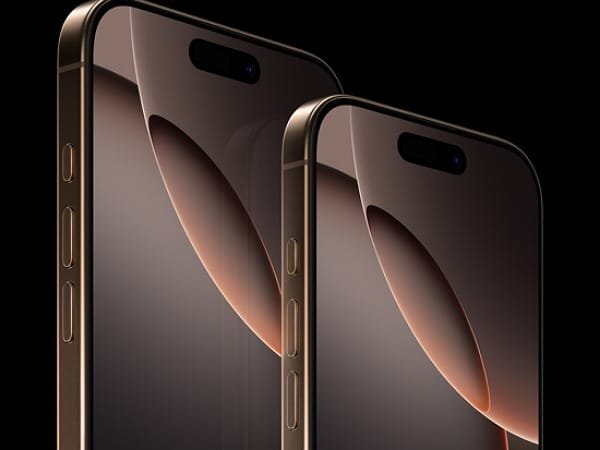
For a long time, Apple’s iPhone lineup has been differentiated by display technology, in particular, from the standard models versus the high-end ‘Pro’ variants. In turn, this has led to the implementation of first LTPS (Low-Temperature Polycrystalline Silicon) displays and more recently LTPO (Low-Temperature Polycrystalline Oxide) screens, setting the Pro apart, thanks to an excellent balance between power efficiency, color representation, and ProMotion technology with its silky-smooth 120Hz refresh rate. But new rumors now detail a revolutionary screen tech for the iPhone 18 Pro: LTPO+, which would level the playing field as Apple gets ready to roll out the iPhone 17 series. The End of LTPO Exclusivity Starting from the iPhone 17 series, Apple is said to put LTPO OLED panels in all models. This will remove yet another advantage that had been reserved for the Pro model family: The LTPO technology used to be a sales argument for the higher-end model line in the past. LTPO+ is a new display innovation Apple could be working on to keep its high-end models exclusive. According to tipster Jukanlosreve, who cites a report by consultancy firm Omdia, LTPO+ will make an appearance firstly on the iPhone 18 Pro and iPhone 18 Pro Max with significant improvements compared to the currently employed LTPO displays. What is LTPO+? While it is still unclear what the details of LTPO+ entail, the new technology is expected to provide better power efficiency and higher-quality display attributes. This can also help Apple compete in the more competitive space by giving another reason for customers to buy the Pro models. LTPO+ development still isn’t mature. Both Samsung and LG, longtime Apple display providers, are the likely manufacturers of these advanced panels. However, the timeline for LTPO+ might be in jeopardy considering how expensive it is to set up production, along with the research required. Potential Manufacturing Issues Apple’s display partners have been delayed in the past when developing new technologies. In fact, Samsung had initially been hesitant to mass-produce OLED displays with which Apple will equip its next-generation M4 iPad Pro series because profitability was an issue. Without large enough orders or incentive for manufacturers to invest in new production lines, something similar could happen to LTPO+. This is estimated to run into billions of dollars in investment for R&D and infrastructure, which may delay the roll-out of LTPO+. If these challenges persist, then it could mean the standard LTPO technology remains on the iPhone 18 Pro lineup. Good News For iPhone Fans: The introduction of LTPO+ technology in the iPhone 18 Pro could redefine the display experience, offering unmatched efficiency and performance. However, given the early stage of development and potential production hurdles, it’s best to approach these rumors with caution. For now, iPhone fans may look ahead to the iPhone 17 series, which will make them have LTPO OLED panels across the board for the first time. If LTPO+ will eventually be the big jump for the iPhone 18 Pro, this is yet to be seen. Anticipation is already building for Apple’s continuous innovation. Source: Jukanlosreve
Siri in iOS 18.2 Integrates ChatGPT, Lays Down Ground for Smarter Siri on iOS 19

The new Siri will debut with iOS 19 and macOS 16, promising users a more human-like conversation. Thanks to enhanced language models, Siri will be able to receive more complex requests from users, respond with context, and handle multi-step tasks. For instance, Siri could manage commands in relation to specific apps or process segmented queries, which would make it way more intuitive and versatile. Apple is currently testing these advanced LLMs in a standalone app across iPhone, iPad, and Mac platforms. The company plans to replace Siri’s existing infrastructure with this cutting-edge AI once development is complete. However, the public release of “LLM Siri” is expected no earlier than 2026, following a possible announcement at Apple’s WWDC event in June 2025. Putting ChatGPT into iOS 18.2 shows that Apple is serious about closing the gap in AI-powered virtual assistants, but this is not the solution that will last. As Apple finishes its proprietary AI, it’s crystal clear the company wants to move past relying on third-party creations such as ChatGPT. The point is that ChatGPT-enabled Siri in iOS 18.2 is a stopgap that will give users a chance to experience more advanced AI while Apple polishes the final result. Future iOS 18 updates will make Siri more free-flowing and independent to do tasks; it will also lay the foundation for the advanced capabilities positioned with iOS 19. For example, Siri will manage complex workflows by dynamically deciding which part of the LLM infrastructure will be triggered based on what the user is requesting. This has been a turning point for Siri in competing with the rest of the industry giants in AI. The current information about Apple’s LLM Siri remains scarce, but Apple’s strategic focus on developing robust AI tools suggests that changes are coming. As Apple works toward its bold ambition-a Siri that is more intelligent, more aware, and more adaptive-the integration of AI will manifest through a series of incremental updates. Support for ChatGPT in iOS 18.2 barely scratches the surface. It is where Apple’s revolutionary AI framework will take over a new paradigm in user-device interaction. Source: Bloomberg
Samsung Could Launch A Triple-Screen Galaxy Z Fold Next Year
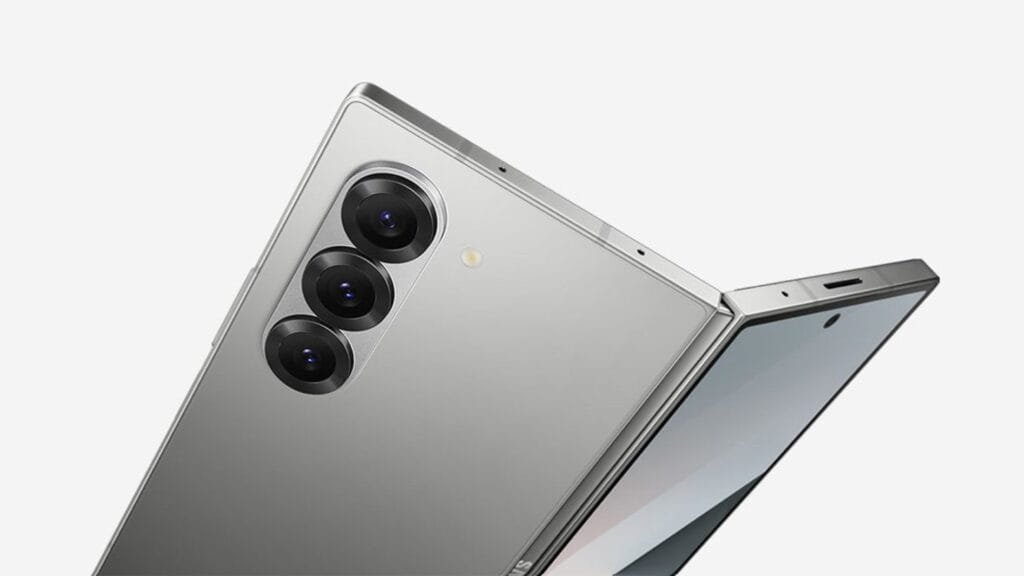
The foldable smartphone market keeps evolving pretty rapidly. The competition has been on the rise, with more and more companies joining the race. Honor already proved to be one of the key players in this sphere by holding the record for the thinnest foldable smartphone. It is also spurring brands to experiment with new categories and fresh design as the category grows. Among these, Samsung seems to be upping the game, where there are rumors of developing a dual-folding Galaxy Z Fold, triple-screen device. More recently, there was a hint that such an innovative Galaxy Fold model could launch next year. This year was an incremental year for foldables from Samsung rather than a revolutionary one. The company has acknowledged this and promised a series of major upgrades in the coming year. From what it looks like, Samsung is readying to reboot the phone category of foldable with a very ambitious dual-folding design. It might be the potential standout regarding usability and versatility for such a device, fitting with the larger strategy of Samsung to make foldables a leader. Recently, Korean blogger yeux1122 reported on Naver that Samsung is indeed working on a new variant called the Fold Z (Triple). Unlike other folding phones, such as the Huawei Mate X2 with both an outward and inward-folding hinges, this model will sport a dual in-folding hinge mechanism. This would also allow Samsung to include a proper external display since one of the most common drawbacks with foldables is that the foldable screen usually acts as both the primary and external display. In this case, that would be separated, enabling better multitasking and general usability, hence making the device more versatile for everyday tasks. The innovative in-folding hinge design on both sides could also offer better durability and transitions between the various display modes. With this new release, Samsung is working on perfecting foldable technology to respond to consumers’ main pain points, such as poor external display customization and sometimes frailty in existing designs. If pulled off, this could very well set a new standard in the foldable market. Along with the triple-screen Fold Z, Samsung is said to be working on several other foldables. The blogger claimed there could be a Galaxy Z Fold 7 Special Edition, which will launch with the regular Galaxy Z Fold 7. This also coincides with a previous report pointing out that special editions may come in store for the Samsung foldable series-a clear indication of strategy from the brand to reach more users. That doesn’t sound like it’s all for Samsung in 2024. There are also rumors about the development of the Galaxy Z Flip 7 FE-a fan edition model that is expected to arrive alongside the standard Z Flip 7. As such, in expanding its foldables with both high-end and more affordable options, Samsung hopes to lock in its leading position within the foldables segment, capturing diverse consumer needs. If these reports prove to be true, 2024 may be the year of Samsung, whose new designs and more lineups would give it a leading edge in the industry of foldable phones currently being dominated by the Chinese. The bold moves by the company will also provide a benchmark for competitors in further advancements within this fast-growing sector. Via yeux1122
Apple iPhone SE 4 Now Expected To Launch In March

Tom O’Malley, an analyst with Barclays, and his team recently completed an Asia trip, where they met several electronics manufacturers and suppliers. Afterwards, in a recent research note, they said Apple will unveil the iPhone SE 4 by the end of the first quarter of next year, consistent with earlier speculation that an announcement could take place in March, the same month as the prior generation launched in March 2022. The new iPhone SE 4 will reportedly feature an iPhone 14 base model-like design. Key specs that have reportedly been included in the device: a 6.1-inch OLED display, Face ID, one single rear camera for a 48-megapixel main sensor, a USB-C port, and a newer A-series chip. The device may also feature 8GB RAM to support enhanced Apple Intelligence features. Most notably, the fourth-generation iPhone SE will feature Apple’s first in-house 5G modem, a move to significantly reduce its reliance on Qualcomm for cellular technology. Apple has been working on its own 5G modem since 2018, after relying on Qualcomm for several years. It would develop its proprietary modem to give Apple a tighter grip on hardware and the levers of cost. While Apple extended its deal with Qualcomm to provide modems for iPhones through 2026, the company is ramping up toward an all-in transition. Apart from the new iPhone SE 4, noted analyst Ming-Chi Kuo claims that Apple’s “iPhone 17 Air” will also include the custom 5G modem. In 2017, Apple sued Qualcomm over anticompetitive practices and unpaid royalties. Both companies settled the lawsuit in 2019. Apple then acquired a majority of Intel’s smartphone modem business, for more patents and expertise that would catapult its modem project. The current iPhone SE that was released in March 2022 starts at $429 in the U.S. It keeps a very similar design to the iPhone 8, including a Touch ID button, thick bezels, and a Lightning port, which are all features now considered ancient next to modern iPhones. It’s expected that this new model will be a considerable upgrade, so the price might just increase accordingly. If the rumours of the March release is true, the new iPhone SE 4 will make its debut in the upcoming months at an Apple event. With increasing competition in budget smartphones and Chinese smartphone makers offering flagship specs in mid range phones, Apple will have a tough time selling iPhone SE 4. Via Macrumors Images: 91Mobiles
Google is integrating Android into Chrome OS to compete with the iPad

Google is using its massive resources to take on one of its nagging challenges: winning the tablet market competing with Apple’s iPad. Though Android and Chrome OS have succeeded in their areas, neither has been successful enough to dislodge the iPad where their functionalities overlap. To change this, Google is apparently working on an initiative that goes a long way in ensuring that Chrome OS is fully transitioned into Android, creating a unified platform that would better match the demands of productivity and media consumption in tablets. Android would be the epitome of flexibility: powering everything from phones and TVs to tablets and smart devices. Chrome OS, on its part, mainly focused on laptops, some of which are tablets. But neither has yet been able to decisively conquer the tablet market space. Android lacks strong productivity features and Chrome OS just isn’t optimized for hassle-free media consumptions. Even after Google’s efforts to improve both systems to fill those gaps, neither has come near to achieving Apple’s success in bridging both use cases. Google plans to address these shortcomings by taking a different route. Instead of the new OS, the company aims to shift Chrome OS over to Android. According to sources, future Chromebooks will run on an advanced version of Android, starting with Google’s rumoured Pixel Laptop. This aligns in such a way that Google gets to combine its development efforts and create a unified operating system for its hardware products. Earlier this year, Google hinted at its plans by announcing that Chrome OS would adopt more Android components, such as the Android Linux kernel and frameworks. Chrome OS already uses some Android-based technologies, like the Fluoride Bluetooth stack, so this transition isn’t entirely surprising. However, new developments include a redesigned Chrome browser for Android with extension support and a Linux terminal for running apps, enhancing Chromebook functionality on Android. Even with this change, Google has the challenging task of making Chrome OS feature-competitive with Android. Improvements like improved keyboard and mouse integration, support for external monitors, multiple desktops, and even a new windowing system are on their way with Android 15. In some ways, these features are already part of Google’s Android-for-laptops effort, where it looks to boost productivity on its tablets, like the upcoming Pixel Tablet 2. This unification would greatly push Android in terms of increasing its users and, by virtue of it, attracting more developers. The bigger base of users would mean that more revenue-making opportunities lie ahead for the developers and more apps for consumers. With Apple being very conservative in bringing truly useful productivity features to its iPads without cannibalizing the MacBooks, Google has a huge gap left in the market to brand its Android-powered devices as the ultimate choice for mobile productivity. Via Android Authority
Asus Announces its Beast Gaming Phones; The ROG Phone 9 and 9 Pro Featuring Snapdragon 8 Elite
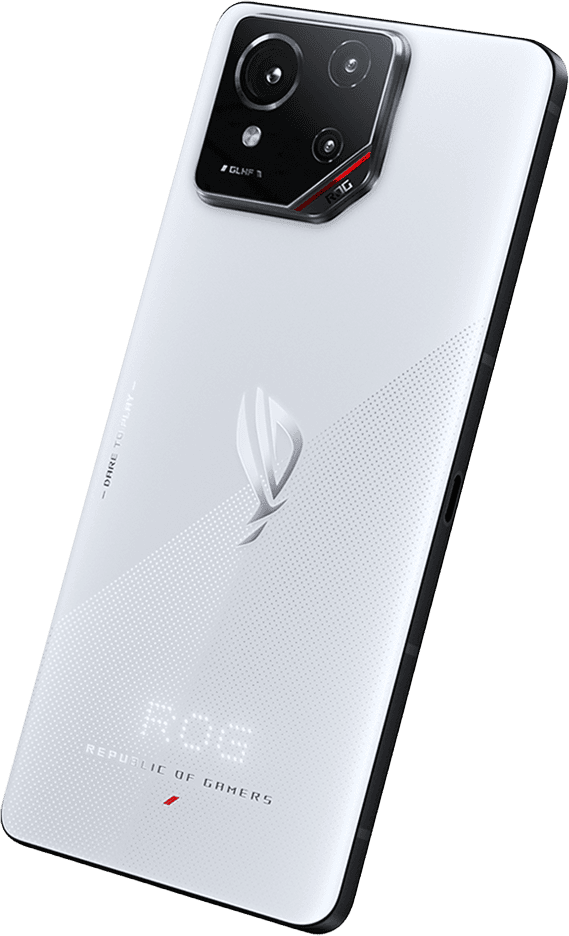
The Asus ROG Phone 8 took a step closer to being user-friendly last year with the introduction of an IP68 rating and the telephoto camera. But as for its gaming heritage, Asus sticks to it by turning performance up several notches with this year’s Asus ROG Phone 9 and 9 Pro. Asus has now revealed their new flagship gaming smartphones; Asus ROG Phone 9 and 9 Pro, featuring a new processor: Snapdragon 8 Elite. The basic variant features up to 16GB of LPDDR5X RAM (9,600Mbps) and 512GB of UFS 4.0 storage and stands in direct competition with the Pro version, which at least breaks through its limits in capacities – up to 24GB of RAM and 1TB of storage. According to Asus, the Snapdragon 8 Elite is capable of delivering a 45% improvement in CPU performance, a 40% faster GPU, and a 40% faster NPU than the Snapdragon 8 Gen 3 in the preceding ROG Phone. Cooling has been upgraded in these phones with a 57% larger graphite sheet, meaning that the phones will run several degrees cooler than the 8 series. Then, of course, there is the still enhanced active cooling that does more than just keep temperatures low. Once again, high-quality first-party accessories make the ROG series stand out as one of the top gaming phones around. It also comes with an AeroCase which can be optionally used with the Chill Case featuring “Audio Redirection” to redirect sound from bottom-firing speaker to the front. With the top-front speaker, the sound heard is an improved stereo sound. The AeroActive Cooler X Pro takes it further with a built-in subwoofer, offering 2.1-channel audio. It’s a feature that has been seen on the AeroActive Cooler 7 but was indeed missing from last year’s Cooler X. The Cooler also boasts two physical shoulder buttons alongside the AirTriggers on the phone. Its cooling capabilities have been remarkably improved through larger fan blades (12.5% bigger) and greater thermal compound for 29% better cooling performance. The 6.78″ AMOLED displays on the Asus ROG Phone 9 and 9 Pro carry over from last year, with FHD+ resolution, up to 1,600 nits of brightness in high-brightness mode (2,500 nits at peak), and 107% DCI-P3 color coverage. A new 185Hz refresh rate is also an option this year using Game Genie (165Hz was the option last year), supported on select titles. There’s also a second sort of display on both models. Both the ROG Phone 9 and 9 Pro boast AniMe Vision, a grid of mini-LEDs that lets you customize the phone’s appearance. The ROG Phone 9 now includes 85 LEDs (a huge leap from four RGB LEDs on its predecessor), and the ROG Phone 9 Pro boasts 648 LEDs, nearly double the 341 LEDs of the 8 Pro. The AniMe Vision on the Pro model has more than enough resolution to display Chinese and Japanese text. You can also upload GIFs for custom animations. But coolest of all? You can play games on the AniMe Vision display! It’s preloaded with four retro-style games-that work based on Breakout, Snake, Invaders, and one more-that you control with the AirTriggers. On the practical side, the Asus ROG Phone 9 and 9 Pro pack 5,800mAh batteries, 300mAh more than the previous model. This upgrade ensures at least 4. 5 hours of heavy gaming on a single charge. Asus claims the battery will maintain at least 80% of its original capacity even after 1,000 charge cycles—roughly equating to three years of daily use. Of course, there’s also fast charging via USB-C at up to 65W; wireless charging even reaches 15W. Again, though, the improved battery capacity slows charging speeds a few ticks – taking 46 minutes to go from 0 to 100% with a wired connection, compared to 39 minutes for its predecessor. Both phones still pack a 50MP main camera using the 1/1.56″ Sony Lytia 700 sensor. Upgraded the 6-axis hybrid gimbal stabilization to correction of +/-5°, up from +/-3°. The back ultra-wide camera stays with its 13MP resolution, and the selfie shooter is still 32MP (with an RGBW sensor and a 22mm lens). The big differences here are on the telephoto module. The Pro model retains from last year the 3x 32MP telephoto camera, which took down the 1/3″ sensor, while in the standard ROG Phone 9, it is completely absent and replaced with a 5MP macro camera. That’s even a step back from the ROG Phone 8, which had included a telephoto lens. Both the models still retain the 3.5mm headphone jack that Dirac has tweaked for great sound quality. Dirac Virtuo binaural audio appears on both the handsets along with support for aptX Lossless, and is Hi-Res Audio and Hi-Res Audio Wireless certified. Asus has also improved its software support policy, promising two OS updates and five years of security updates—one year more than the ROG Phone 8 received. Pre-orders for Asus ROG Phone 9 and 9 Pro are open starting today while shipping begins the next day in Taiwan, Hong Kong, and mainland China. Shipments in Europe, including the UK, will start in December, while in the US launch will happen in January 2025 with further details. As for the pricing, The Asus ROG Phone 9 starts at $999 while the Pro version will set you back at $1200. Source: ASUS
Samsung Galaxy S25 Ultra To Cost More Than Its Predecessor
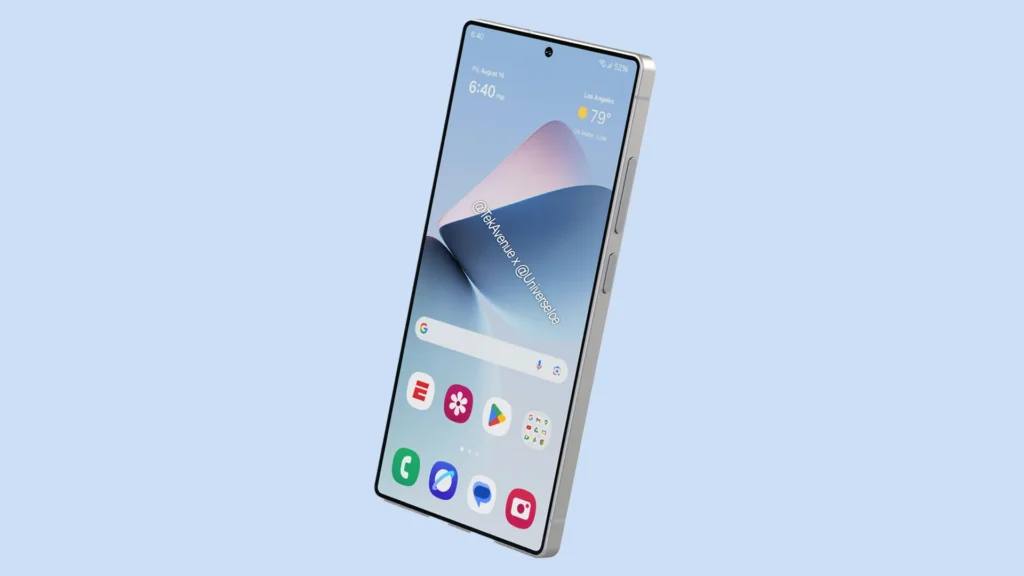
For the most part, rumors about Samsung Galaxy S25 Ultra have been quite exciting, but talk of a potential price increase is less welcome. Kudos to the reports that had speculated that Samsung could make its flagship even costlier. According to Weibo leaker Setsuna Digital, the top-tier Galaxy S25 model will have a production cost that is upwards of at least $110 more compared to the Galaxy S24 Ultra. Yet another leaker, Jukanlosreve, thinks that price hikes are “inevitable.” Setsuna Digital here is much more reserved in its evaluation and expresses that it is “likely to raise prices in many regions.” If Samsung were to pass on the full rumored increased costs to consumers, the Galaxy S25 Ultra could be around $1,409. That would put it hundreds of dollars more expensive than competitors such as the $1,199 iPhone 16 Pro Max or the $1,099 Google Pixel 9 Pro XL, possibly affecting the purchasing choice of many Samsung customers. However, the relationship between production costs and retail prices is not always easy. Instead, Samsung is expected to hike up the price by around $50, to maintain profit margins by absorbing part of the added costs. Alternatively, Samsung may prefer keeping the price the same to maintain competitiveness against its top competitors. The Galaxy S24 Ultra already experienced a US dollar-priced hike of $100 from the 2023 version of the Galaxy S23 Ultra. A second price hike for two successive years would certainly be unpopular among buyers, although Samsung may have required that to maintain profit margins at a time when production costs are rising. While the leak doesn’t make it clear why the Galaxy S25 Ultra costs more in production, other rumors do. There’s speculation that the new Snapdragon 8 Elite chip will cost more due to the silicon’s expense, and new features such as a bigger screen, a higher resolution ultrawide camera, and variable-zoom telephotos could factor in. Samsung has officially announced that the Galaxy S25 series will launch in 2025, though the exact date is still unclear. However, based on past trends, it’s likely to debut in January. Besides the rumored Galaxy S25 and S25 Plus and S25 Ultra coming to the next Galaxy Unpacked event, there’s a possibility of the new model Galaxy S25 Slim too. Source: Weibo Image credit: Ice Universe
Galaxy S25 Ultra Dummy Leaked; Gives Us A First Look At Samsung’s 2025 Flagship

As we step closer into the new year, rumors on the new wave of Android flagships do create a hefty buzz, and it all starts with the Samsung Galaxy S25 Ultra and its S25 series phones. Samsung hasn’t said much officially, but leaks and renders are handing over early views for enthusiasts. The latest leak displays dummy units of the Galaxy S25 Ultra and gives early hints about its design. Shown in black and white, these units feature a rear camera setup that looks to carry most of the previous model’s design. However, there is one design change. The cameras have concentric rings which seem more similar to the Galaxy Z Fold 6 style rather than the Galaxy S24 Ultra. This subtle change comes with the new visual element while maintaining Samsung’s iconic premium feel. A closer inspection reveals a notable ergonomic enhancement. The Galaxy S25 Ultra seems to have more curved edges than the chiseled Galaxy S24 Ultra. While the corners retain a sharp radius, this refinement may make the device easier to hold and grip. Previous Ultra iterations, such as the S24 Ultra, were often panned for being less friendly to the hand, so this tweak should be well received by the masses. Flatter side edges are further visible at the sides, though a proper side-profile view might offer a clearer look. From the front, the design looks less remarkable, mostly because there is no display on the dummy unit. However, the screen is almost flat from this angle and follows the flat frame to keep its language intact, a design principle applied by other recent Samsung flagships. One flaw with the dummy unit is the screen protector, which features easily noticeable bubbles. This could be concerning for some, yet it is worth noting that Samsung won’t be shipping devices in such condition. In fact, just like the Galaxy S24 Ultra, the S25 Ultra is unlikely to come with a pre-installed screen protector. As with any leak, it’s important to take these details with a pinch of salt. While dummy units often reflect the final product’s design, they aren’t definitive. However, the features seen in this leak align with earlier rumors and renders, suggesting some credibility. Samsung is expected to announce the Galaxy S25 series sometime in early 2025, probably on one of Samsung’s annual launch dates. Until that time, though, fans will have to depend on leaks and rumors for a glimpse of what might just prove to be the most significant Android flagship release of the year. If all these claims are true, it seems the Galaxy S25 Ultra could be a highly refined and ergonomically improved upgrade. Source & Images: @Jukanlosreve